
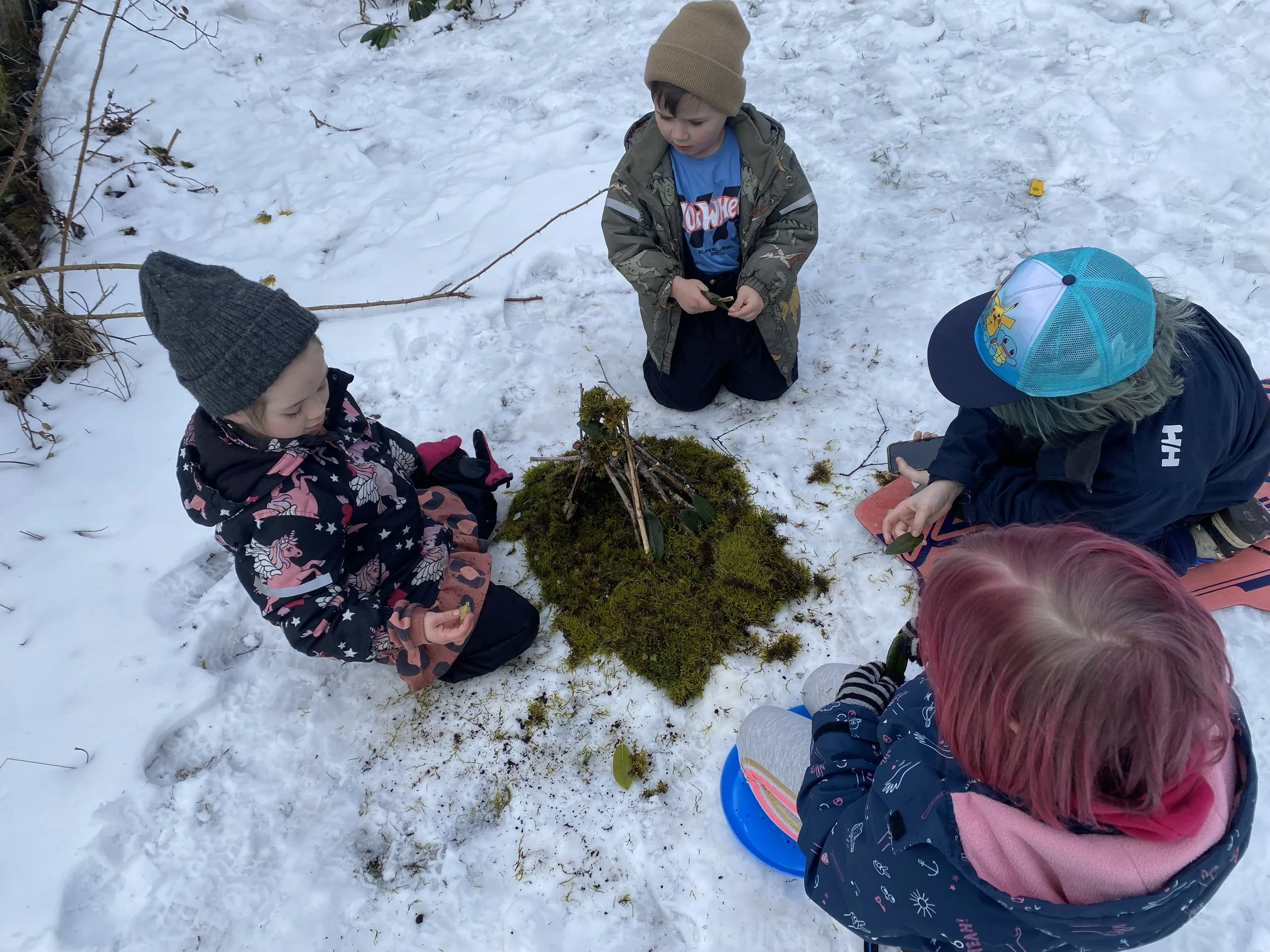
The Roots of Forest School Learning
Forest School Principles
Forest School practice is guided by six key principles as defined by the Forest School Association
Regular and repeated sessions
Learning is built over time through regular, sustained engagement in a natural environment rather than one off visitsLearner centred
Forest School supports individual interests, needs, and abilities, allowing participants to take an active role in their learningHolistic development
The approach nurtures cognitive, physical, social, and emotional growth in a supportive and inclusive settingAdult role
Qualified Forest School practitioners act as facilitators, observing, supporting, and encouraging learners to make independent discoveriesLearning through play and hands on experiences
Children learn through practical, experiential activities that promote curiosity, problem solving, and creativityRisk and challenge
Opportunities for managed risk are integral to learning, helping participants to develop resilience, confidence, and self awareness
From Scandinavian practice to modern school provision
❋ Forest School’s Origins in Scandinavia
Forest School originates from educational practices developed in Scandinavia, where learning through regular engagement with the natural environment is an established and respected approach. Forest School is suitable for children of all ages, as well as adults, who benefit from experiential learning opportunities that are naturally embedded within woodland settings.
The central philosophy of Forest School is to support holistic development through purposeful outdoor experiences. These experiences encourage curiosity, emotional wellbeing, and intrinsic motivation. Research and practice indicate that learning in natural environments can reduce stress, support sustained concentration, and increase engagement with learning, particularly for learners who may find conventional classroom settings challenging.
❋ An Innovative Approach to the National Curriculum
Forest School provides an alternative and complementary approach to delivering a broad and balanced curriculum through regular sessions in a woodland environment, with a minimum of six sessions delivered across the year.
Learning experiences are carefully aligned with the National Curriculum and the Early Years Foundation Stage. Teaching approaches are flexible and responsive, enabling provision for a wide range of learning styles and developmental needs. Within a clearly defined and safe framework, learners are supported to explore, investigate, and make independent discoveries, fostering deeper understanding and long term engagement with learning.
❋ Forest School Supports the Development of:
• Confidence and self esteem
• Communication and social competence
• Physical development and coordination
• Understanding of and respect for the natural environment
• Motivation and a positive disposition towards learning
• The ability to identify, assess, and manage risk
• Independent thinking and the confidence to initiate learning and play
• Healthy lifestyle habits and emotional wellbeing
Measurable Benefits of Forest School
Confidence79%
Pupils reported higher self belief after outdoor lessons
source
Enjoyment
92%
Children preferred outdoor sessions to classroom lessons
source
Self Esteem40-60%
Observed improvement over a year of regular Forest School sessions
source
Attention15-25%
Measured gains in classroom focus and engagement
source
Physical Skills30-50%
Balance and coordination improvements in Scandinavian studies
source
Environmental Awareness70%+
Children demonstrated greater understanding of sustainability
source